Design Systems as Infrastructure
Why design systems are enterprise infrastructure.
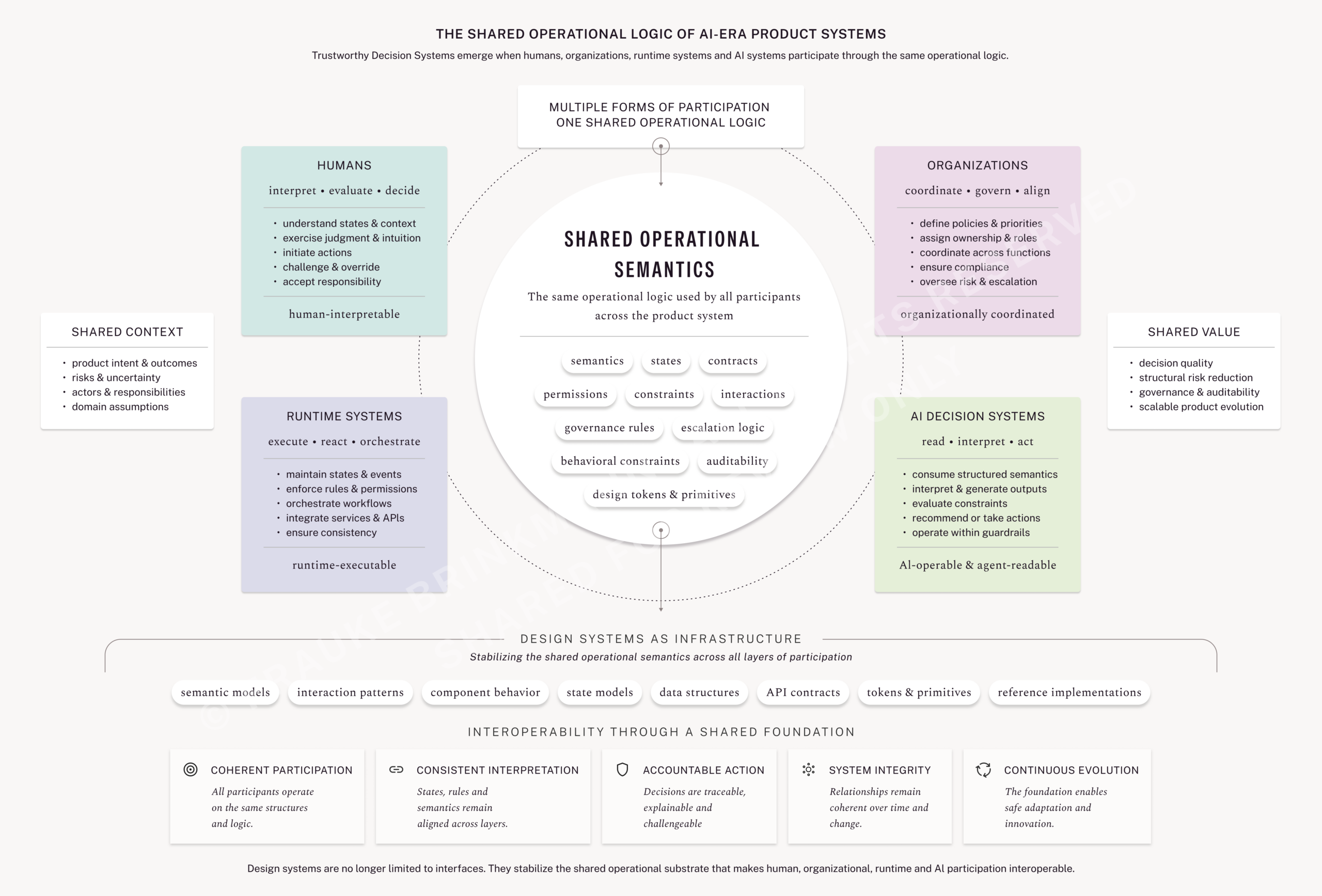
A design system is not a component library. In AI-era product systems, design systems increasingly evolve into the shared operational foundation through which humans, runtime systems and AI systems participate in the same product logic.
Design systems do not primarily solve reuse. They stabilize the relationships that determine system integrity.
Fragmentation is the default
Digital product systems do not evolve as coherent wholes. They grow across domains, teams, releases and technologies. Without structural stabilization, fragmentation becomes the default.
Typical Symptoms
→ Misaligned intent
→ Inconsistent behavior
→ Integration drift
→ Evidence gaps
→ Diffused accountability
The Six Infrastructure Dimensions
The System Integrity Evolution Model describes how product intent is transformed into operational and auditable system structures. The Six Infrastructure Dimensions describe the business capabilities a design system must stabilize to make this transformation scalable.

"The Six dimensions no longer stabilize isolated interfaces alone. Together, they stabilize the shared operational foundation through which modern product systems evolve."
Use cases define which states matter.
Use cases define the states that matter. They make visible which states in a product system are relevant to users and therefore must be stabilized consistently across domains.
From use cases to runtime
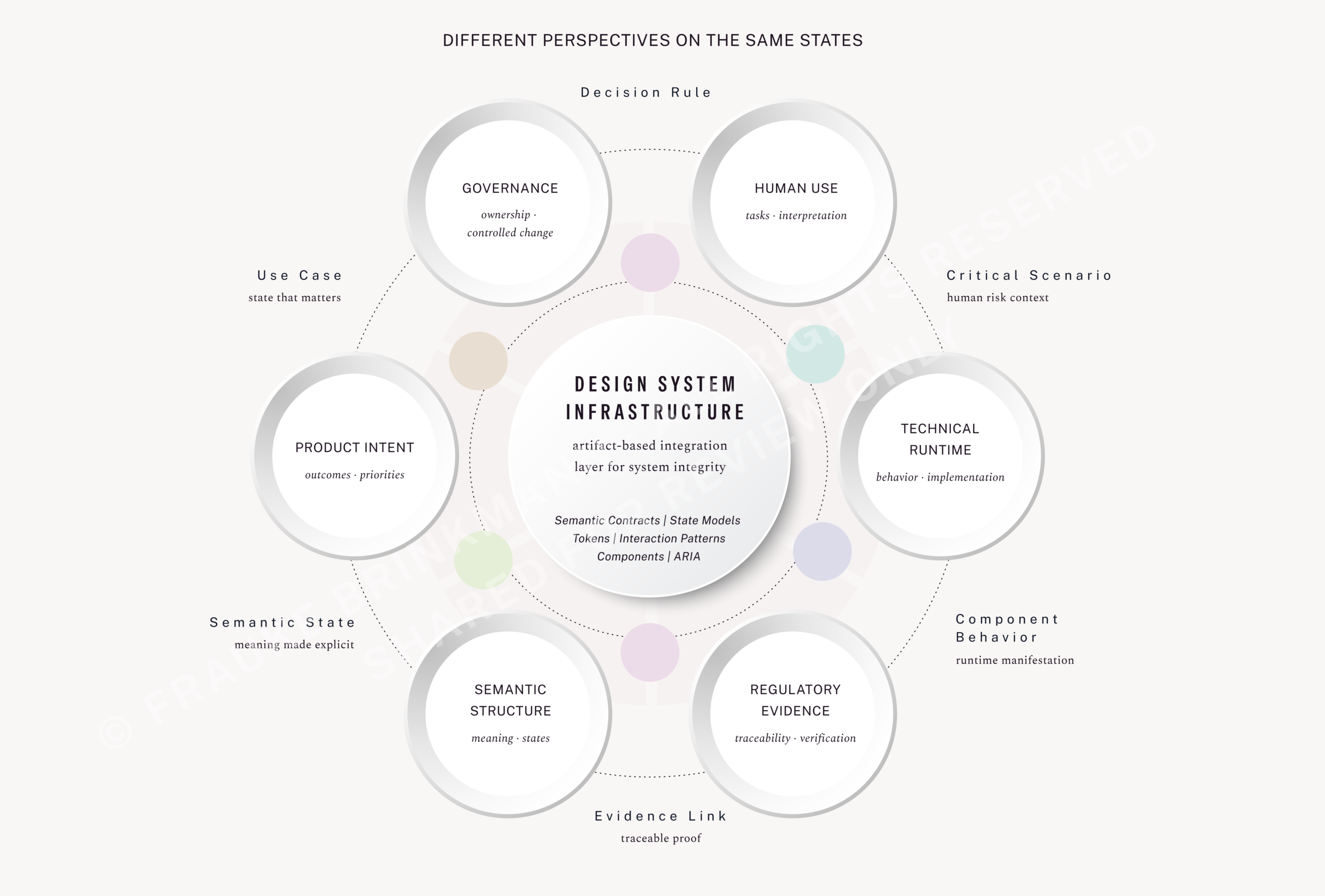
A design system becomes infrastructure when it stabilizes the relationships between human-relevant product states across meaning, semantics, runtime, governance and regulatory evidence. Semantic contracts translate human-relevant states into shared operational semantics.
The Dots That Matter
System integrity does not emerge at a single point in time. It evolves as critical interfaces between product-system layers are repeatedly stabilized through interoperable contracts, artifacts and governance structures.
The States that matter to humans are the same States that must be structurally stabilized.
The states that matter to humans increasingly become the same states that must remain structurally interpretable across runtime systems, governance structures and AI-supported environments.
Design systems stabilize these shared operational structures through semantics, behavior, governance and traceability.
Human-Relevant Product Systems
Products exist because they influence human decisions. The states that matter to humans become the structural reference points. Architecture is the discipline that keeps those states coherent across humans, organizations, runtime systems and AI.
Why Most Design Systems Fail
Most design systems fail because they focus on components rather than on the relationships those components are meant to stabilize.
· No shared semantics
· No governance
· No ownership
· No versioned contracts
· No regulatory integration
· No economic framing
“A design system is not a component library. It is infrastructure for system integrity.”
Shared Operational Logic
The Shared Operational Logic illustrates how humans, organizations, runtime systems and AI systems participate through the same operational semantics. It positions design systems as the infrastructure that stabilizes this shared foundation, enabling interoperable participation, accountable decisions and coherent product evolution.